Start with medical clearance. Before beginning any new exercise program, consult with your physician. This is especially important if you have existing health conditions or have been sedentary.
Embrace walking as your foundation. Walking is accessible, safe, and effective. Start where you are—even if that’s just five minutes at a comfortable pace. Gradually increase your duration, then begin incorporating short intervals of brisker walking. The goal is to occasionally feel slightly breathless, though you should still be able to speak in short sentences.
Try interval training, adapted for your fitness level. The concept is simple: alternate between periods of moderate effort and easier recovery. This might look like walking at a normal pace for three minutes, then walking slightly faster for 30 seconds to one minute. These brief pushes are remarkably effective at improving cardiovascular fitness.
Consider water-based exercise. Swimming and water aerobics provide excellent cardiovascular benefits with minimal joint stress. The buoyancy of water makes movement easier while still providing resistance.
Don’t neglect strength training. While our focus is VO2 max, strength training complements aerobic exercise beautifully. Stronger muscles make aerobic activities easier and safer. Simple bodyweight exercises, resistance bands, or light weights can make a real difference.
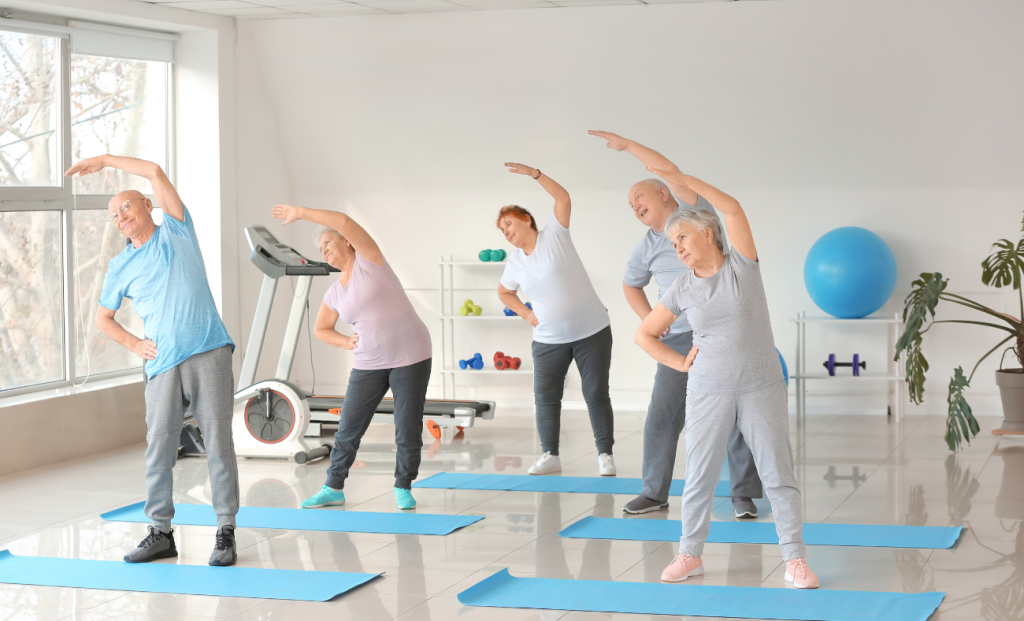
Make it social. Join a walking group, take a senior fitness class, or recruit a walking buddy. Social connections make exercise more enjoyable and sustainable, and they provide safety and accountability.
Use household activities strategically. Gardening, active housework, and taking stairs when safe can all contribute to your cardiovascular fitness when done regularly and with some effort.
Consistency trumps intensity. At this stage of life, showing up regularly matters more than pushing to exhaustion. Aim for movement most days of the week rather than sporadic intense sessions.
Listen to your body, but distinguish discomfort from pain. Some breathlessness and mild muscle fatigue during exercise is normal and beneficial. Sharp pain, dizziness, or chest discomfort means stop and consult your doctor.
Setting Realistic Expectations
Progress at 80-plus looks different than at 40 or 60. You might improve more slowly, and you’ll need more recovery time. That’s completely normal. Celebrate every milestone: walking an extra block, climbing stairs with less huffing, or keeping up with a grandchild a bit longer.
The goal isn’t to become an athlete—it’s to maintain the cardiovascular capacity that lets you live the life you want to live.
The Bottom Line
VO2 max in your 80s and beyond isn’t a vanity metric. It’s a measure of your body’s fundamental capacity to support the life you want to lead—whether that’s traveling, volunteering, pursuing hobbies, or simply maintaining your independence at home.
The science is clear: cardiovascular fitness is modifiable even in advanced age, and the benefits extend far beyond the purely physical. Every bit of improvement in VO2 max represents more energy, more capability, and more years of independence.
So lace up those walking shoes. Your future self—and your family—will thank you for it.